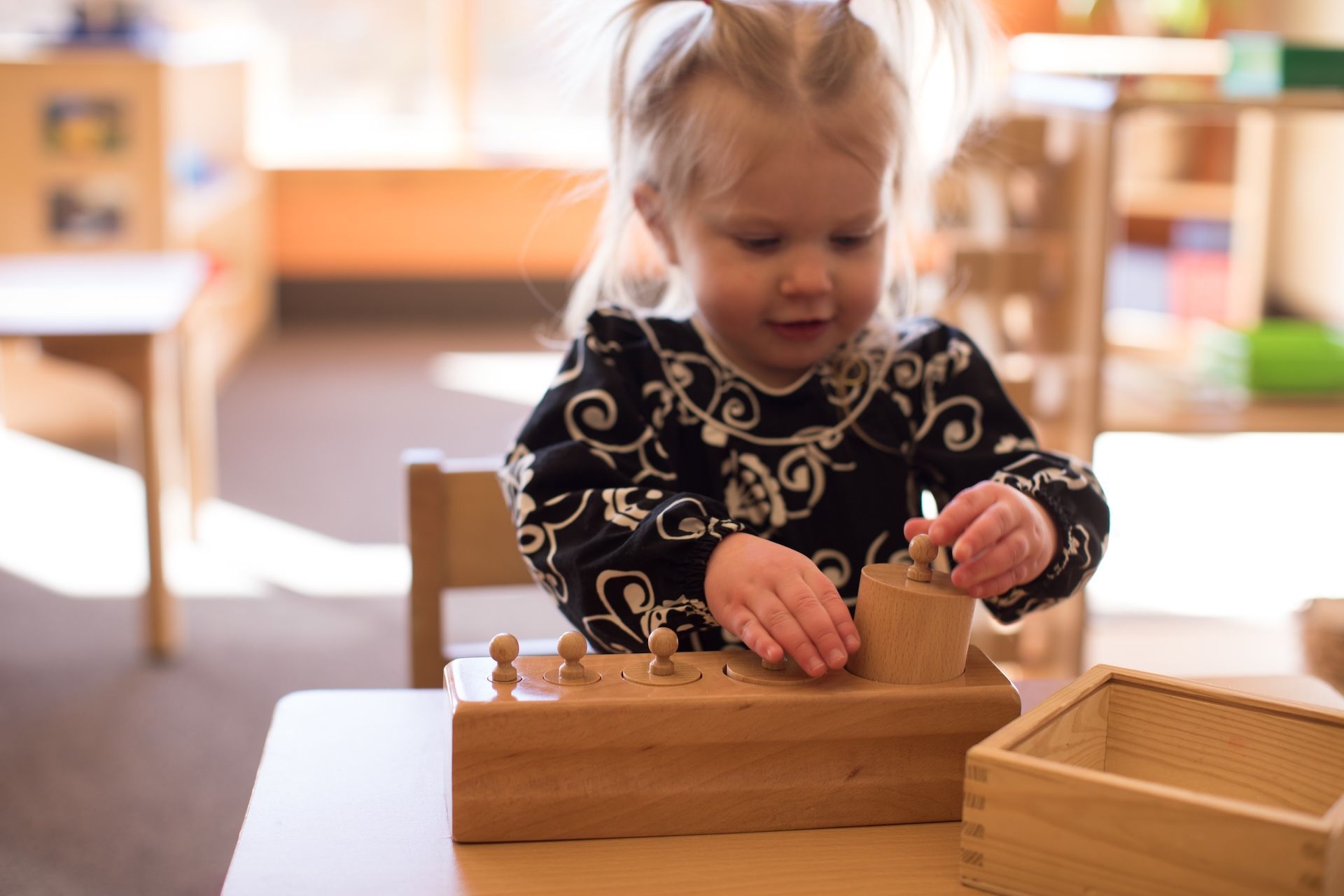


Discover how Dr. Maria Montessori’s 3-hour uninterrupted work period helps children build deep focus, cognitive skills, and independence at Montessori School of Oakton.
The foundation of authentic Montessori education lies in Dr. Maria Montessori’s scientific observations of child development. Through her research, she discovered that children thrive when given extended, uninterrupted blocks of time to explore, concentrate, and master concepts.
To support this natural developmental need, children ages three and older require a continuous three-hour work period. This extended time allows them to move through their own unique rhythms of exploration, focus, and consolidation, with the most profound growth often taking place toward the end of the cycle.
Understanding the "Flow State"
In modern developmental psychology, this deep level of engagement is often called the flow state: a state of being so completely immersed in meaningful activity that time and external distractions fade away.
Psychologist Mihaly Csikszentmihalyi popularized the concept of "flow" in the 1970s while studying happiness and creativity. Interestingly, when Csikszentmihalyi later watched his own grandchildren thrive in a Montessori environment, he observed firsthand how beautifully a prepared Montessori classroom enables young children to achieve this optimal mental state.
Honor the Rhythm: Long, Uninterrupted Work Periods
At Montessori School of Oakton, we deliberately structure our daily classroom schedules around an uninterrupted morning work cycle.
Our morning routine allows children the time they need to greet their peers, settle in, and transition peacefully without feeling rushed. Once the classroom community is settled, our trained Montessori Guides offer individual and small-group lessons, while gently supporting each child as they initiate their chosen work.
During the work cycle, students engage in a rich variety of self-directed and guided activities. They may choose practical life exercises, sensorial materials, mathematics, or language work. This freedom to choose purposeful work with guidance fosters independence, emotional regulation, and genuine joy in learning.
The Cognitive and Developmental Benefits
When children are protected from frequent interruptions, external bell schedules, or forced transitions, they build the essential mental foundation for lifelong learning:
- Strengthened Executive Function: Modern neuroscience reveals that deep focus activates the prefrontal cortex: the area of the brain responsible for problem-solving, planning, decision-making, and self-regulation. Frequent disruptions cause the brain to reset and reorient, leading to fragmented thinking. Uninterrupted time allows these critical pathways to mature.
- Enhanced Retention and Confidence: Free from the pressure of a ticking clock, children approach challenges with a relaxed, open mindset. This relaxed state enhances memory retention, deepens comprehension, and builds intrinsic confidence in their ability to solve problems independently.
- Emotional Calm and Well-being: Children who experience deep, uninterrupted concentration naturally gain a sense of inner satisfaction and calm, which helps them regulate emotions and treat their peers with grace and courtesy.
As Dr. Montessori wrote in The Absorbent Mind, allowing children to work without unnecessary interruption nurtures confidence, self-discipline, and deep respect for learning.
The Guide’s Role in a Prepared Environment
Our Montessori Guides play an essential role during the work period. By carefully observing each child, Guides introduce new challenges at precisely the right developmental moment, step in when support is needed, and protect the peaceful, focused atmosphere of the room.
Within this framework of freedom, children learn clear boundaries, responsibility, and respect for their community. The result is a classroom filled with a calm, joyful, and productive hum.
Experience the Montessori Difference
Would you like to see how long, uninterrupted work periods foster independence and confidence in our students? We invite you to
visit our campus in Fairfax and observe our classroom environments in action.