

Learn how Montessori educators harness sensitive periods—natural windows of growth in order, language, movement, and the senses—to foster joyful learning.
Have you ever noticed how sensitive young children can be to changes in routine? Even the slightest schedule adjustment can throw off their day. On the positive side, young children also have an incredible ability to internalize the order of their daily activities—intuitively knowing when something is supposed to happen during a regular day.
It is equally amazing how quickly young children absorb the intricacies of language, how they progress seamlessly from sitting to crawling to walking and running, or how intently focused they can be on tiny details.
During these stages of life, children seem compelled by an irresistible inner force. Think of a toddler who wants to climb the same steps again and again. We might try to stop them, but they remain undeterred! Despite the great physical effort involved, the activity brings them joy and almost seems effortless.
In Montessori education, we pay close attention to these developmental windows when children show an intense focus on mastering a new skill, gaining deep understanding, or refining their abilities. We call these extraordinary stages "Sensitive Periods."
What Are Sensitive Periods?
To illustrate sensitive periods, Dr. Maria Montessori used the example of newly hatched caterpillars. Drawn by a biological drive, young caterpillars move toward the bright light at the tips of branches, where they find the softest young leaves to eat. They aren't consciously aware that light leads to food; they are simply responding to a natural developmental urge. Once that need is satisfied, the attraction to bright light fades, and the caterpillar moves into its next stage of growth.
Like caterpillars, young children in a sensitive period become deeply absorbed in acquiring specific skills that aid their development. Neurologically, this is a time of peak activity, when key neural networks are established in the developing brain. These windows of opportunity are temporary and marked by a child's passionate focus.
In the Montessori classroom, we focus primarily on four key sensitive periods:
- Order
- Language
- Refinement of the Senses
- Movement
1. The Sensitive Period for Order
- Peak Window: Birth to 3 years (continuing through age 6)
- What It Looks Like: An intense interest in environmental order and predictable routines (time, sequence of events, placement of objects).
While adults value order for convenience, young children rely on order as the foundation for their understanding of the world. If that foundation shifts constantly, the child must divert energy away from other developmental work just to adapt. A predictable, ordered environment gives children the security they need to trust their surroundings and establish an internal sense of order.
2. The Sensitive Period for Language
- Peak Window: Birth to 6 years
- What It Looks Like: Unconsciously absorbing spoken language from birth to age 3, followed by the expansion, refinement, writing, and reading of language from ages 3 to 6.
Children naturally internalize the rhythm, grammar, and nuances of the language spoken around them. To support this window, we enrich our classrooms and homes with precise vocabulary, naming real objects, and engaging in rich, meaningful conversations from infancy onward.
3. The Sensitive Period for Refinement of the Senses
- Peak Window: Birth to 4.5 years
- What It Looks Like: Developing powers of sensory discrimination to organize, classify, and perceive finer details in the environment.
This period isn't about making eyes see better or ears hear better; it's about building neural networks that interpret visual, auditory, olfactory, tactile, and gustatory impressions. Sensorially rich environments allow children to develop remarkable sensory discrimination skills—like fine artistic appreciation or perfect pitch—that last a lifetime.
4. The Sensitive Period for Movement
- Peak Window: Rapid development from birth, with refinement occurring between ages 2.5 and 4
- What It Looks Like: Directing gross and fine motor skills toward purposeful, real-world tasks.
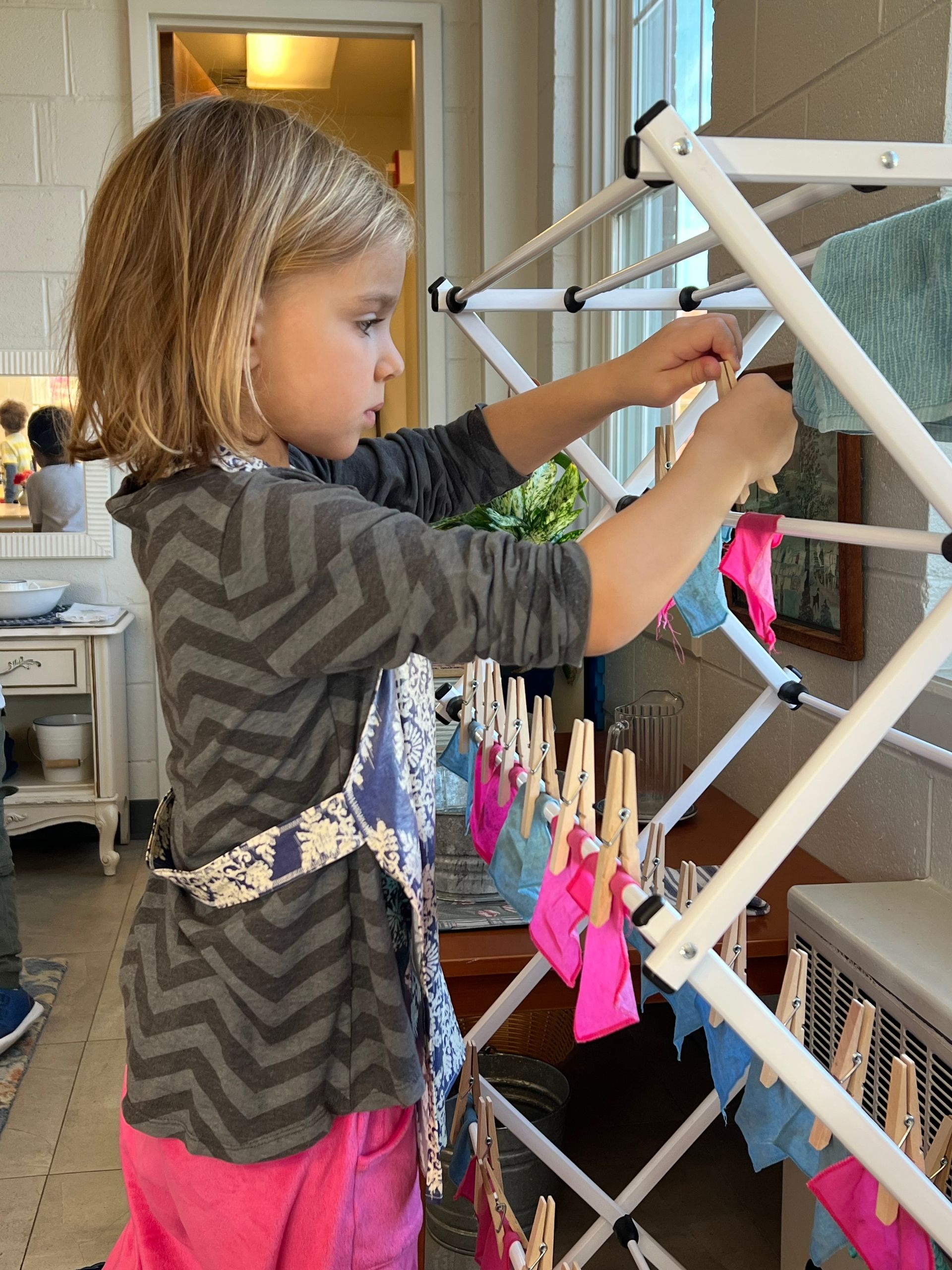
Movement is how children explore their environment, express their personality, and build independence. Rather than artificial play items, young children are most fulfilled when engaging in real, purposeful activity—such as slicing fruit, pouring water, or helping prepare meals. Meaningful practical life work helps them refine movement while making valuable contributions to their community.
Unlocking Potential and Inner Joy
The phrase "sensitive period" serves as a gentle reminder for parents and educators to tread mindfully and protect these critical stages of development.
When children are in a sensitive period, they master complex skills without conscious effort. Once these periods pass, skills can still be acquired, but doing so requires much greater effort and deliberate practice—think of how much harder it is to learn a second language as an adult!
Most beautifully, when a child's sensitive periods are supported within a prepared environment, they experience a profound sense of inner satisfaction and joy.
Discover Joyful Learning at MSO
We invite you to experience our prepared environments firsthand.
Reach out to our team at Montessori School of Oakton to attend an
information session,
schedule a tour, and see this natural joy in action.