
Discover how Dr. Maria Montessori’s Absorbent Mind allows young children to learn effortlessly and how parents and schools can nurture this natural potential.
Have you ever wondered how young children seem to absorb the world around them so effortlessly? Long before they begin formal instruction, they pick up spoken language, master complex movements, and mimic our exact gestures and emotional tones with astonishing accuracy.
Dr. Maria Montessori identified this remarkable phenomenon as the Absorbent Mind: a unique developmental stage occurring during the first six years of life when a child’s mind acts like a sponge, effortlessly taking in every detail of their environment.
Understanding this powerful phase helps us create learning environments at home and in the classroom that truly nurture a child's natural potential.
The Absorbent Mind vs. The Adult Mind
The way a child learns during these early years is fundamentally different from how adults process information:
- Adult Learning is Conscious: Adults learn through deliberate effort: we analyze, study, repeat, and memorize.
- Child Learning is Unconscious and Continuous: A child absorbs knowledge directly and effortlessly into their inner being.
Dr. Montessori famously illustrated this difference using the metaphor of a camera versus a painter:
An adult mind acts like a painter, carefully choosing what to focus on, filtering background details, and interpreting the scene. A child’s mind acts like a camera—taking in the entire image at once. Every detail of the environment, whether orderly or chaotic, peaceful or rushed, is instantly captured and incorporated into their developing mind.
During this period of intense neural plasticity, childhood experiences do not simply rest in memory; they actively construct the child's intelligence, character, and view of the world. As Dr. Montessori wrote in The Absorbent Mind, children "incarnate" the world around them—what they see and hear becomes a core part of who they are.
The Two Phases of Early Brain Development
Montessori education divides the absorbent mind into two distinct developmental stages:
1. The Unconscious Absorbent Mind (Birth to Age 3)
During the first three years, children take in sensory impressions entirely without conscious filter. Guided by an inner developmental drive, they learn to walk, speak, navigate spaces, and process emotions. Adults cannot teach these foundational skills directly; our role is simply to prepare a safe, rich environment and allow the child to explore naturally.
2. The Conscious Absorbent Mind (Ages 3 to 6)
As children enter our Primary programs (Ages 3 to 6), their minds begin to organize and categorize everything they have previously absorbed. This is when a strong desire for order and purposeful activity emerges.
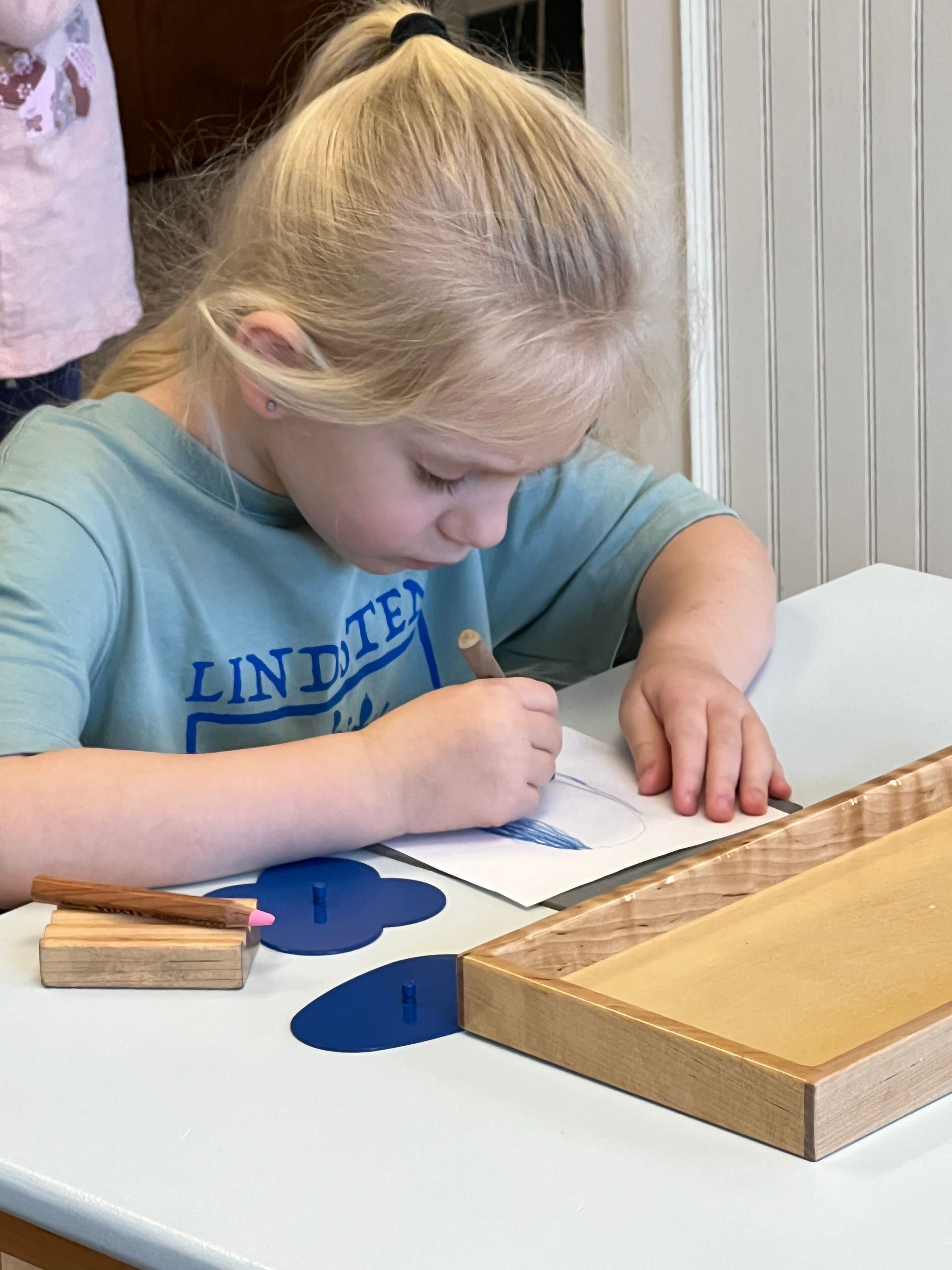
In a prepared Montessori Primary classroom, hands-on materials—such as the sensorial apparatus, practical life exercises, and early literacy work like the Moveable Alphabet—allow children to classify, compare, and refine their understanding of the world through intentional, self-directed activity.
Key Characteristics of This Special Developmental Window
- Totality of Impressions: Children absorb social cues, emotional atmospheres, language patterns, and daily habits just as readily as facts.
- Guided by Sensitive Periods: Natural windows of development draw children irresistibly toward specific skills, such as language acquisition, spatial order, and refined motor control.
- Effortless Adaptation: Through this process, children effortlessly adapt to the specific culture, language, and customs of their family and community.
Nurturing the Absorbent Mind at Home
Because the young child absorbs everything without discrimination, the environment we prepare for them matters deeply. Here are a few practical ways to support your child’s natural learning process at home:
- Maintain Order and Predictability: Keep toys and daily items on low, open shelves. A tidy, consistent space helps children organize their thoughts and builds mental clarity.
- Use Rich, Respectful Language: Speak clearly, avoid baby talk, and use precise vocabulary. The words and tone you use today become your child's inner voice tomorrow.
- Encourage Practical Independence: Allow your child to participate in daily household routines—pouring water from a small pitcher, hanging up their coat, or clearing their plate.
- Cultivate a Peaceful Atmosphere: Children absorb the emotional tone of their surroundings. Modeling patience, grace, and courtesy provides the best foundation for their emotional regulation.
Experience the Prepared Environment at MSO
At Montessori School of Oakton, our Primary environments are thoughtfully prepared to honor and serve the absorbent mind. From child-sized furniture to specialized hands-on learning materials, every element of our classrooms invites exploration, concentration, and deep personal growth.
We invite prospective families to join us for an
Information Session and school tour to observe our vibrant learning community in action.